What does the end of the world look like? Would you know it if you saw it?
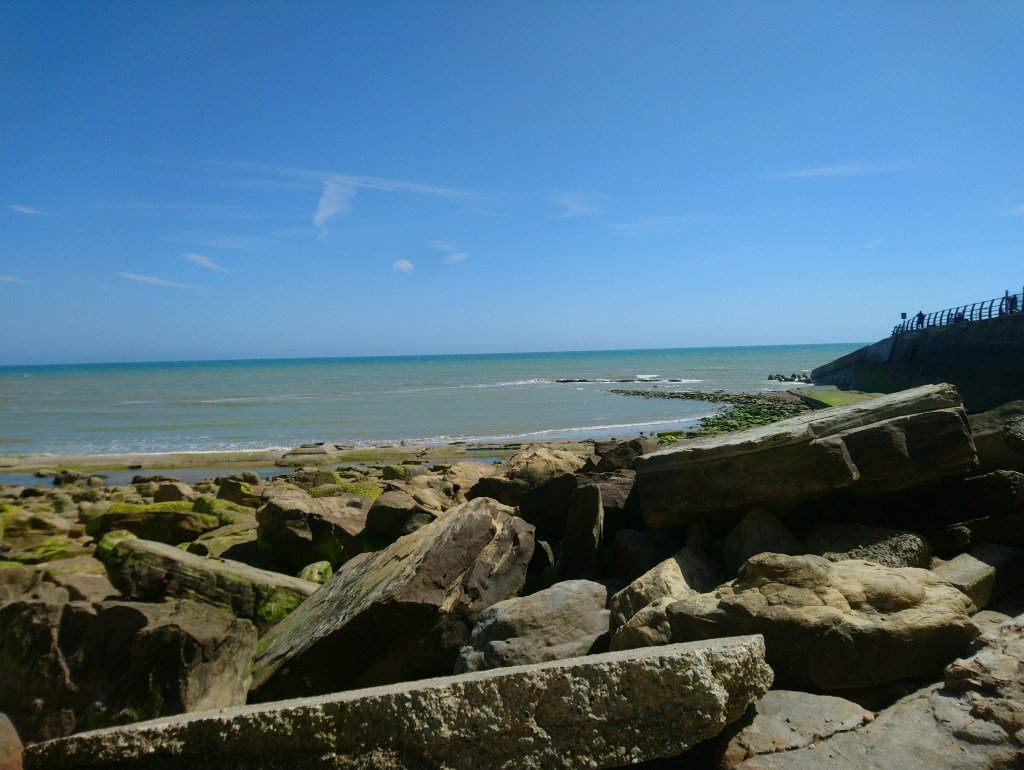
I watch my two older boys play on an area of seaside I’ve taken to calling Landslide Beach. There used to be a promenade, but the cliffs above cascaded it to ruin, and now the only access is to pick your way down boulder by boulder. My baby’s sleeping in the harness; the older boys have scrabbled at the cliff’s edge for around an hour and are now jogging round the sand below, finding big rocks to toss into the sea, whooping at the big splashes. There’s a metaphor there, about a little boy’s desire to make his splash in an impersonal and sometimes hostile sea, but I don’t want to labour it.
A father and his children gouge rocks out of the cliffside, and I think about landslides thundering down, how small and seemingly inconsequential things can start a cascade that can’t be reckoned with or stopped. I want to warn them, these fossil hunters at the edge of the sea, but I can’t.
Instead I listen to the unearthly hum of the wind singing in the bars of the parking lot fence above, and I think about what’s going to happen in the world within ten years, and I look at my boys.
There’s no signal on my phone. When the next Carrington event comes, I think to myself, so many things, including this musing, will be lost.
Seagulls swoop around my older children, and I think about their other parent and how she fed the seagulls on our roof against our wishes and warnings, until the neighbours asked her to stop after we left. I think about the seagull who has staked out our Airbnb window, and I wonder if she has fed it, if she can somehow see us through its beady eyes. There’s a metaphor there about feeding things that harm you, but I don’t want to labour it.
Instead I watch my boys, and I think about the end of the world.
Would I see the landslide before it engulfed me and the people I love? What does the end of the world look like?
What does the beginning of a new world look like? Does it look the same?
 Sonya Blanck writings